
You finally get your blood test results back, and instead of clarity, you are staring at a page of acronyms, flagged numbers, and medical jargon that raises more questions than it answers. Fret not, I can tell you this: that confusion is not your fault, and it is completely fixable. An annual blood test is not just a routine chore. It is one of the most powerful tools you have for understanding your specific body and making confident decisions about your health.
“Your blood plays a big role in your overall health and contains a lot of information about what may be going on in your body" (1). For women between 30 and 50, that information is absolutely crucial. You are juggling hormonal shifts, career demands, and family life all at once. Understanding what each individual marker in the blood test actually means gives you the knowledge to take informed, proactive steps toward a healthier future.
Why Your 30s and 40s are the "Golden Window" for Preventive Blood Work
Most of us treat our health like a car engine, only checking under the hood when a warning light flashes. These decades are your best opportunity to establish a personal baseline before problems develop. Annual blood test is a cornerstone of preventive health for women aged 30-50, focusing on markers like comprehensive metabolic panels (CMP), complete blood counts (CBC), lipid profiles, thyroid function, and glucose levels.
The statistics make a compelling case for acting now. Currently, 39.7% of women aged 20 to 39 and 43.3% of women aged 40 to 59 manage chronic conditions that affect markers like glucose and cholesterol. Cancer incidence rates for women under 50 now exceed those for men, which underscores the need for vigilant screening. Tracking your blood test results annually lets us catch negative trends early, when a lifestyle change can still correct course.
The Big Four Blood Test: Decoding CBC, CMP, Lipid Panels, and Thyroid Tests
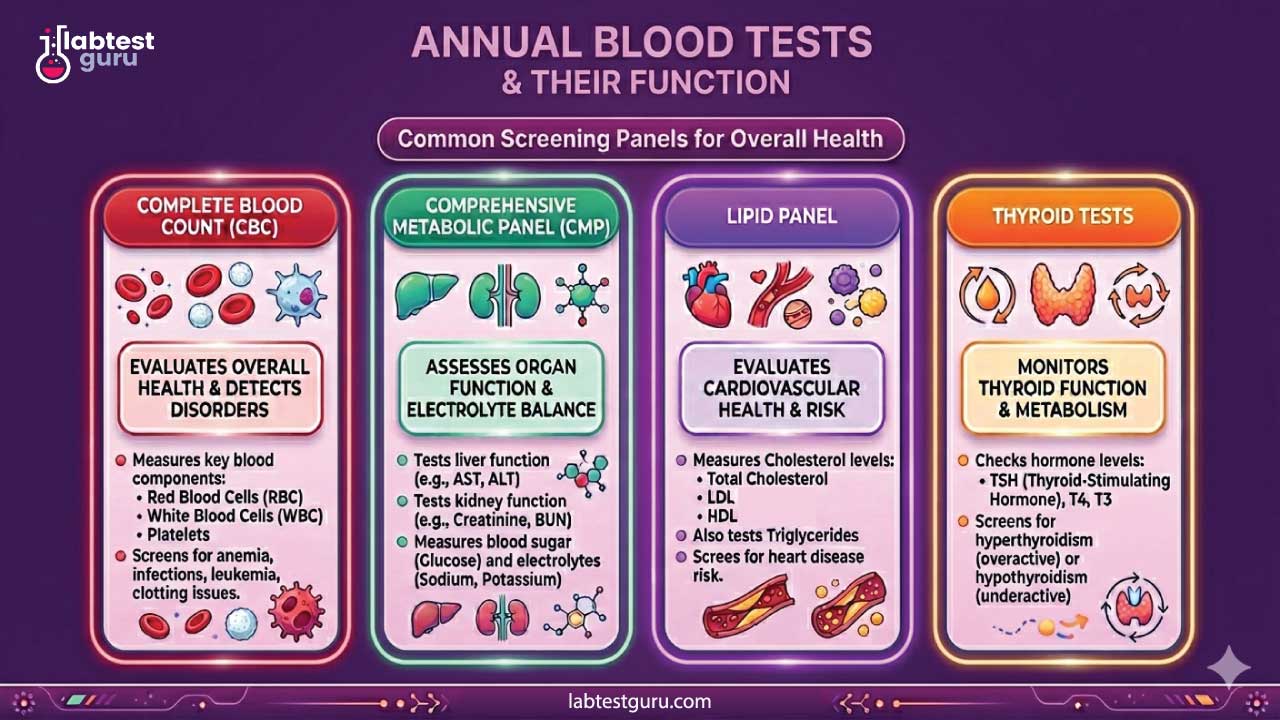
When your doctor orders routine blood test, they are looking at four main categories. Knowing what each one covers turns those mysterious acronyms into clear, actionable insights. A complete blood count, or CBC, evaluates the cells circulating in your blood. A metabolic panel gives a snapshot of your kidney function, liver health, and electrolyte balance. Women, for instance, naturally have lower creatinine levels than men due to differences in muscle mass, which is a critical detail your doctor factors into any kidney assessment. Your lipid profile measures cardiovascular risk, and thyroid tests check the hormones that regulate your metabolism.
Iron and Anemia: Why the Standard CBC Isn't Enough for Menstruating Women
Many pre-menopausal women have lower red blood cell counts simply because of regular menstruation. For adult women, a normal hemoglobin range typically sits between 12 and 15 gm/dL, and a normal hematocrit range is 36% to 44%. But a basic CBC blood test alone can miss the full picture. You also need to check ferritin, which represents your stored iron. A low serum ferritin level can indicate iron deficiency anemia. Fatigue can set in long before your hemoglobin drops out of range, because your iron stores run dry first. To add another layer of complexity, up to 44% of women with abnormal thyroid function also have anemia, which makes looking at these two blood test results together essential.
The Silent Risk: Lipoprotein (a) and ApoB for Heart Health
Your lipid profile breaks down your cholesterol into the familiar markers: LDL, HDL, and triglycerides. To get accurate blood test readings, you must fast for 9 to 12 hours before a lipoprotein panel. Here is the thing though: standard lipid panels do not always tell the whole story. Longevity experts now recommend checking specialized markers like Apolipoprotein B (ApoB) and Lipoprotein(a), because these provide a far clearer picture of your actual cardiovascular risk than standard cholesterol metrics alone.
TSH vs. Free T4: Getting the Full Thyroid Picture
Thyroid issues are incredibly common for women in this age bracket, yet standard screening usually checks only Thyroid Stimulating Hormone (TSH). If you are experiencing unexplained weight gain, brain fog, or hair loss, ask your doctor to add Free T3 and Free T4 to your panel. Those two extra markers show how your body is actually using thyroid hormones, not just how hard your brain is asking for them.
Perimenopause and Your Blood: What Markers to Watch as Hormones Shift
Perimenopause can begin in your late 30s. During this transition, estrogen and progesterone start to fluctuate significantly, and those hormonal shifts ripple through other systems in your body. A drop in estrogen, for example, can trigger sudden changes in your lipid profile or fasting glucose levels that seem to come from nowhere.
Tracking markers like Follicle Stimulating Hormone (FSH) and estradiol over several years tells a far richer story than any single random test. When you and your doctor can see how these levels shift month over month, managing symptoms like hot flashes, mood changes, and disrupted sleep becomes a much more precise conversation.
Beyond "Normal": Understanding Optimal Ranges for Longevity
You get your results back, everything is marked "normal," and yet you still feel terrible. Here is why that happens. Standard reference ranges reflect the average of a broad population, and they frequently ignore individual health nuances.
As clinical expert Sandra Ishkanes points out, "Reference ranges are not 'optimal' for all; they reflect lab averages excluding known diseases but ignore individual health" (2). Take fasting glucose as an example. Your number might technically sit within the normal bracket, but if it has crept upward every single year, you are losing metabolic flexibility. The goal is not to survive within a "normal" range. It is to thrive within an optimal one. And always keep this in mind: "Blood test results aren't diagnoses. An abnormal blood test result may not mean you have a serious medical condition" (1).
Future-Proofing Your Health: Emerging Trends in Menstrual and Wearable Diagnostics
The future of pathology is moving outside the clinic. Many women now combine their annual lab work with data from wearable fitness devices, tracking heart rate variability and sleep stages alongside their blood markers for a more complete daily health picture. We are entering an era of continuous, personalised monitoring, and it changes everything about how we interpret a single set of annual results.
One of the most exciting advances is the use of menstrual blood for diagnostic testing. FDA-cleared menstrual pad tests now screen for conditions like diabetes (3), offering a non-venous diagnostic option women can use comfortably at home. It effectively bridges the gap between annual physicals and the months of health data in between.
Pro-Tips for Your Next Draw: How to Get the Most Accurate Results
Preparing properly makes the process easier and keeps your blood test results accurate. Start with hydration. Drinking plenty of water plumps up your veins and makes the phlebotomist's job significantly easier. Applying a gentle moisturiser to your arms in the days before the test keeps the skin supple and cooperative.
Light exercise before your appointment promotes good blood flow, though you should avoid intense workouts right before a metabolic panel. And if the thought of multiple vials makes you anxious, here is some reassurance. A comprehensive panel may take up to 30 mL of blood, but the average adult has between 4,500 and 5,700 mL circulating in their body at any given time. Your body replaces those lost fluids within hours.
Your Blood Work Is a Conversation, Not a Verdict
A single set of blood test results is not a final answer. It is the start of a conversation between you and your body. The real power comes from showing up every year, tracking how your markers shift over time, and asking your doctor the right questions when something does not feel right.
Your 30s and 40s are not the time to hand that conversation over entirely to someone else. You now know what a CBC actually measures, why ferritin matters more than hemoglobin alone, and why "normal" does not always mean optimal. That knowledge changes the dynamic in the exam room. You stop being a passive recipient of results and start being an active participant in your own health.
Book the blood test. Prepare well for it. Then bring your results back to this guide and read them with fresh eyes. Your blood has been telling your story all along. Now you have the tools to understand what it is saying.
Frequently Asked Questions (FAQs)
Why is an annual blood test necessary if I feel healthy?
Routine blood work acts as a baseline for your "normal" health. Many conditions, such as high cholesterol, early-stage kidney disease, or prediabetes, often show no outward symptoms. By tracking these markers annually, you and your doctor can identify trends and intervene before a minor shift becomes a chronic issue.
Do I really need to fast before my blood draw?
Fasting is typically required for 8 to 12 hours before tests like a Lipid Panel (cholesterol) or a Fasting Glucose test. Nutrients and ingredients in food and drinks are absorbed into the bloodstream and can temporarily spike levels of sugar or fats, leading to inaccurate results. If your doctor has ordered these specific tests, "fasting" means consuming nothing but water.
Can I drink coffee or tea while fasting?
It is best to stick to plain water. Even black coffee contains caffeine and other compounds that can act as stimulants or diuretics, potentially affecting your hydration levels or metabolic markers. Water, however, is encouraged as it keeps your veins hydrated and makes the blood draw easier.
What are the most common tests included in a yearly check-up?
Most annual physicals include three core panels:
- Complete Blood Count (CBC): Measures red and white blood cells and platelets to check for anemia, infection, or clotting issues.
- Comprehensive Metabolic Panel (CMP): Evaluates liver and kidney function, electrolyte balance, and blood sugar.
- Lipid Panel: Checks total cholesterol, HDL (good), LDL (bad), and triglycerides to assess cardiovascular risk.
How long does it take to get the results back?
Most routine results, such as a CBC or CMP, are available within 24 to 48 hours. More specialized tests, such as those for vitamin levels or specific hormones, may take 3 to 5 business days as they sometimes require specialized laboratory equipment.
What should I do if a result is flagged as "Abnormal"?
An "abnormal" flag simply means the value falls outside the laboratory’s standard reference range. This does not always indicate a disease. Factors like recent exercise, hydration, medications, or even minor illnesses can push a result out of range. Your doctor will look at the result in the context of your overall health history and may suggest a follow-up test to confirm the finding.
How can I prevent bruising after the test?
To minimize bruising, keep the bandage on for at least several hours and avoid heavy lifting or vigorous exercise with that arm for the rest of the day. Applying firm pressure to the site immediately after the needle is removed is the most effective way to prevent blood from leaking into the surrounding tissue.
What if I am afraid of needles or have a history of fainting?
Phlebotomists are trained to help patients with "needle phobia." You should inform the staff beforehand; they can have you lie down during the procedure and use smaller needles (often called "butterfly needles") to make the process quicker and more comfortable. Staying well-hydrated with water before the appointment also makes the veins easier to find, reducing the time the needle is in place.
Disclaimer: This information is for general knowledge and informational purposes only and does not constitute medical advice. Always consult with a qualified healthcare professional for any health concerns or before making any decisions related to your health.
References
- https://my.clevelandclinic.org/health/diagnostics/24508-blood-tests
- https://sandraishkanes.co.uk/courses/blood-test-results-explained/
- https://www.prnewswire.com/news-releases/qvin-introduces-q-pad-transforming-womens-health-with-fda-cleared-lab-testing-using-menstrual-blood-302027835.html
- https://www.normanregional.com/blog/2025/december/a-women-s-health-check-up-list-for-every-age-you/
- https://www.trioshealth.org/news/2025/12/22/what-your-annual-blood-work-can-reveal-about-your-health
- https://int.livhospital.com/medical-examinations-you-should-do-once-a-year/#:~:text=Blood%20tests%20are%20a%20big,a%20glucose%20test%20for%20diabetes.
- https://www.hims.com/blog/what-blood-test-should-i-get
- https://www.iapac.org/fact-sheet/metabolic-panels/
- https://www.healthline.com/health/blood-tests
- https://www.nhlbi.nih.gov/health/blood-tests
- Seo, I. H., & Lee, Y. J. (2022). Usefulness of Complete Blood Count (CBC) to Assess Cardiovascular and Metabolic Diseases in Clinical Settings: A Comprehensive Literature Review. Biomedicines, 10(11), 2697. https://doi.org/10.3390/biomedicines10112697
- https://www.cancer.org/cancer/diagnosis-staging/tests/blood-tests.html
- https://medlineplus.gov/lab-tests/what-you-need-to-know-about-blood-testing/