
Key Takeaways
- The Importance of Hydration: Plain water is your best friend during a fast. It keeps your veins accessible and makes the blood draw significantly more comfortable.
- Caffeine Restrictions: Coffee and tea must be avoided. Caffeine can interfere with sugar metabolism and act as a diuretic, making it harder for the technician to find a vein.
- Hidden Fast-Breakers: Activities like smoking, vigorous exercise, and chewing sugarless gum can stimulate your digestive system and skew your results.
- Medication Management: Continue taking your daily prescriptions with water unless your doctor explicitly tells you otherwise, but be mindful of the timing for thyroid and hormone medications.
- Post-Draw Recovery: Always have a protein-rich snack and water ready to consume immediately after your appointment to stabilize your energy levels.
Countless individuals stress over their annual checkups. If you are a woman between 30 and 50 taking proactive steps for your wellbeing, you want your lab results to be flawless. A common question is how to handle fasting for blood work. Understanding exactly what to do can make the difference between a clear health snapshot and an inaccurate diagnosis.
Is Fasting Still Necessary?
Medical technology today has advanced significantly. The need for a strict fasting for blood work is not as universal as it once was (Texas Health Resources, 2024). However, for specific metabolic and lipid tests, abstaining from food remains a critical baseline requirement.
Think of fasting like giving your internal plumbing a temporary flush. By avoiding food and drinks beforehand, your healthcare provider gets a clearer baseline reading of what is naturally circulating in your blood (Cleveland Clinic, 2024).
There is also a hidden danger called surreptitious fasting. This happens when patients fast without being instructed to do so. If you fast before a blood test when you do not need to, that can skew your results and lead to the misclassification of conditions like prediabetes (Cleveland Clinic, 2024). Always confirm the specific requirements with your clinic.
The Big Three: Tests That Always Require a Fast
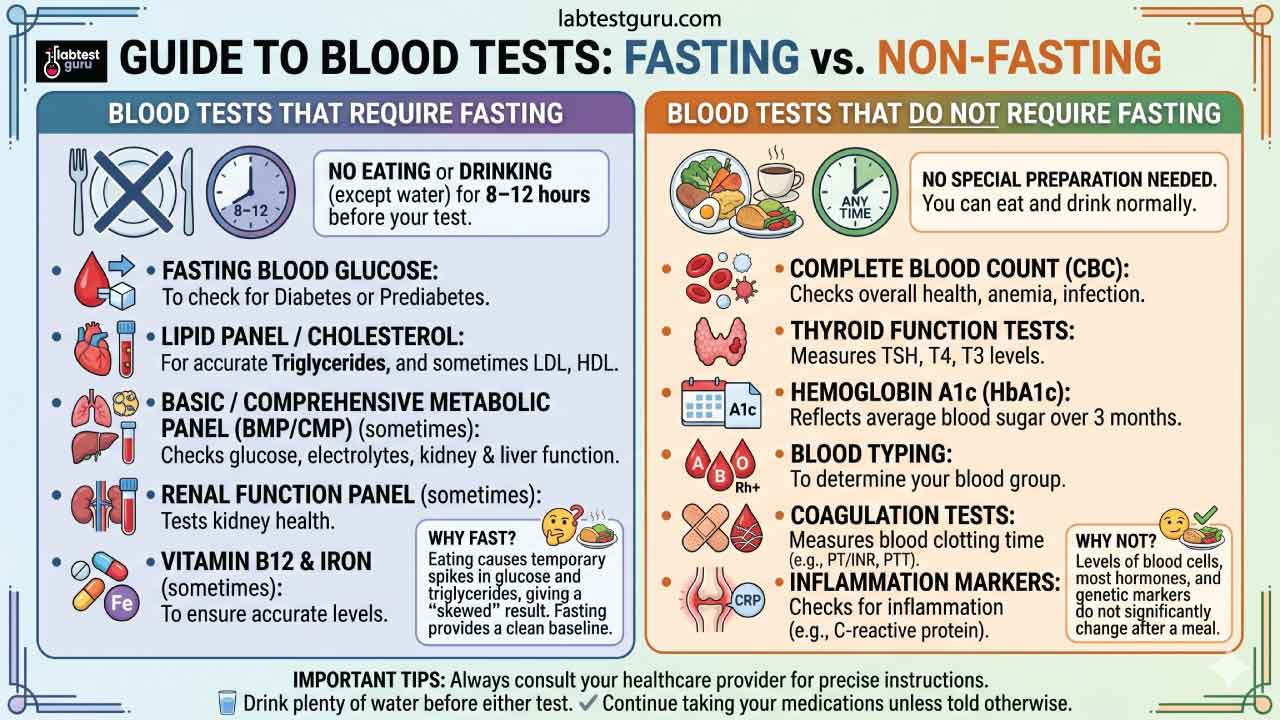
Certain diagnostics demand a completely clean slate. Standard tests requiring a fast include blood glucose tests for diabetes screening, lipid panels for cholesterol and triglycerides, and basic metabolic panels (MedlinePlus).
When fasting for blood work is required, it typically means abstaining from all food and drink except water for 8 to 12 hours. Lipid panels may specifically require the full 12 hours to prevent temporary spikes in circulating fats from skewing the data (WebMD, 2024).
Test Comparison Guide:
- Requires Fasting: Lipid Panels, Fasting Blood Glucose, Comprehensive Metabolic Panel (CMP)
- Typically No Fasting Required: Complete Blood Count (CBC), Thyroid Panels, Hemoglobin A1c
The "Water Only" Rule: Why Hydration is Your Best Friend
Fasting means you do not eat or drink anything but water for a period of time before the blood draw (UW Health). Plain water is not only allowed but actively encouraged. Proper hydration keeps your veins plump and accessible. This makes the physical blood draw much easier for the phlebotomist and significantly more comfortable for you.
The Coffee and Caffeine Debate: What Science Says vs. What Doctors Order
Can you sneak in a morning cup of black coffee? While some emerging small studies suggest black coffee might not drastically change glucose or triglycerides in healthy adults (Choi, Park & Je, 2025; Keirns et al, 2020), standard clinical practice has not changed. Coffee must be avoided. Caffeine can skew sugar metabolism results and acts as a diuretic. This diuretic effect can lead to dehydration and make your veins harder to find (Cleveland Clinic, 2024). Follow what your doctor orders and save the espresso for after your appointment.
Beyond Food
Smoking, Exercise, and Gum
A proper fast extends beyond your breakfast plate. Smoking, vigorous morning exercise, and even chewing sugarless gum are prohibited during your fasting window (Quest Diagnostics). These activities stimulate your digestive system and can alter various blood markers. Chewing gum tricks your stomach into preparing for food. This can trigger the release of stomach acids and enzymes that compromise your baseline results.
Medication & Supplements
Women in their thirties and forties often manage a finely tuned regimen of daily vitamins, thyroid medications, and hormonal therapies. Most prescription medications should be continued unless specifically stopped by a doctor (Salinas Valley Medical Clinic Lab). However, the timing for hormone replacements or thyroid medication may require adjustment to ensure they do not interfere with specific diagnostic panels. Always present a complete list of your daily pills to your healthcare provider well before your appointment.
The "Oops" Protocol: What to Do If You Slipped Up
Mistakes happen. Perhaps you forgot about the test and ate a piece of toast or added a splash of milk to your tea. If you slip up, do not panic and do not hide it. Report your exact intake to the phlebotomist before the needle goes into your arm (MedlinePlus). They can note this on your file so the interpreting physician understands the context of the results. Honesty is the absolute best policy for accurate lab work.
Recovery: What to Pack for the Post-Draw Moment
Fasting can take a toll on your body. This is especially true if you have a busy morning schedule. For patients managing blood sugar issues, fasting can trigger hypoglycemia, which is characterized by dangerously low blood sugar. Patients are recommended to bring juice or glucose tablets to consume immediately after the draw (WebMD, 2024). Even if you do not have diabetes, packing a protein-rich snack and a bottle of water will help you stabilize your energy and ward off lightheadedness.
Night-Before Checklist
- Stop eating 8 to 12 hours before your scheduled appointment time.
- Drink 16 ounces of plain water before bed.
- Pack your morning medications to take immediately after your blood draw.
- Prepare a high-protein snack for the ride home.
Frequently Asked Questions (FAQs)
Is chewing gum allowed during the fasting window?
You should avoid chewing gum, even if it is sugar-free. The act of chewing triggers a cephalic phase response, which tells your body that food is coming. This can stimulate the release of digestive enzymes and insulin, potentially affecting your glucose readings (Quest Diagnostics). To ensure your internal chemistry remains at a true baseline, avoid gum, mints, and breath strips.
What should I do about my morning medications?
For women in their 30s to 50s, staying consistent with thyroid or blood pressure medication is usually vital. In most cases, you should continue taking your prescription medications with a sip of water (Salinas Valley Medical Clinic Lab). However, because certain supplements or hormones can influence specific tests, you must confirm the timing with your doctor. If you are instructed to wait, bring your medication with you to the lab and take it immediately after the phlebotomist finishes the draw.
How long do I actually need to stay fasted?
The standard window is 8 to 12 hours before your test (MedlinePlus). If you are specifically having a lipid panel to check your cholesterol and triglycerides, I recommend aiming for the full 12 hour mark. This ensures that the fats from your last meal have been completely cleared from your bloodstream. If your appointment is at 8:00 AM, you should finish your last meal by 8:00 PM the night before.
Does drinking water "dilute" my blood for the test?
No, drinking water will not dilute your blood in a way that interferes with your results. In fact, being well-hydrated is a clinical advantage. It increases the volume in your veins, making them easier to locate and access (UW Health). Unless you have been specifically told to limit fluids for a different type of procedure, such as a scan requiring contrast, you should drink plenty of plain water during your fast.
What if I accidentally ate or drank something?
If you had a lapse in memory and consumed something other than water, do not skip your appointment. Instead, tell the lab technician as soon as you arrive (MedlinePlus). Depending on the test, they may still be able to proceed, or they might suggest rescheduling to ensure the data is accurate. It is much better to reschedule than to base a health decision on skewed numbers.
Disclaimer: This information is for general knowledge and informational purposes only and does not constitute medical advice. Always consult with a qualified healthcare professional for any health concerns or before making any decisions related to your health.
References
- Cleveland Clinic. "Fasting Before Blood Work." https://my.clevelandclinic.org/health/articles/fasting-for-blood-work
- UW Health. "Fasting Blood Draw | Patients & Families." https://patient.uwhealth.org/healthfacts/7979
- Salinas Valley Medical Clinic Lab. "Fasting Instructions for Lab Testing." https://www.salinasvalleyhealth.com/services/laboratory-services/fasting-instructions/
- WebMD. "Fasting for Blood Work." https://www.webmd.com/cholesterol-management/fasting-blood-tests
- MedlinePlus. "Fasting for a Blood Test: MedlinePlus Medical Test." https://medlineplus.gov/lab-tests/fasting-for-a-blood-test/
- Quest Diagnostics. "Fasting for lab tests." https://www.questdiagnostics.com/patients/get-tested/prepare/fasting
- Texas Health Resources. "Quick Question: Do You Actually Need to Fast Before an Annual Blood Test?" https://www.texashealth.org/areyouawellbeing/Health-and-Well-Being/Quick-Question-Do-You-Actually-Need-to-Fast-Before-an-Annual-Blood-Test
- Choi, S., Park, T., & Je, Y. (2025). Association Between Coffee Consumption and Glucose Metabolism Markers in Korean Adults. Nutrients, 17(9), 1484. https://doi.org/10.3390/nu17091484
- Keirns, B., Elliott, D., Sciarrillo, C., Koemel, N., Poindexter, K., & Emerson, S. (2020). Effect of Black Coffee on Fasting Metabolic Markers and an Abbreviated Fat Tolerance Test. Current Developments in Nutrition, 4(Suppl 2), 639. https://doi.org/10.1093/cdn/nzaa049_032